
Boxing King Leo is a name that fight fans often search for when they want to understand a career built on discipline, power, and perseverance. Moreover, this guide explores who this figure is, how his journey in the ring unfolded, and why his story resonates with newcomers and seasoned followers alike. Additionally, we cover the key moments, training approach, and lessons that define his place in the sport. Finally, whether you are researching for a project, following recent news, or simply curious, this overview gives you a clear and organized starting point.
Who Is Boxing King Leo? Background and Early Life

Note: I don’t have verified biographical details about Boxing King Leo, so I haven’t invented a backstory. The draft below shows how to structure this section. Replace the framework with confirmed facts from reliable sources before publishing.
Origins and Upbringing
Every fighter’s story begins somewhere specific. Therefore, readers want to know where he grew up and what shaped his early years. Strong background sections usually answer three core questions:
- Where and when was he born?
- What was his family or community environment like?
- Did sports play a role in his daily routine?
Keep these answers concrete. Vague phrases like “grew up in a tough neighborhood” add little value. Instead, name the city, describe the household, and explain how those surroundings influenced his discipline or work ethic.
How Boxing Entered His Life
Many boxers first encounter the sport through a local gym, a school program, or a family member who trained. Therefore, the origin story often reveals why he committed to boxing rather than another sport.
Consider documenting:
- The first contact: the gym, class, or event where he first laced up gloves
- The motivation: whether he sought fitness, self-defense, or competition
- The early reaction: how family, friends, or coaches responded
For example, a fighter who started boxing after a childhood fitness class has a different narrative than one who entered after a street confrontation. Although both stories matter, each signals different values to readers.
Tips for Verifying Early Life Facts
- Cross-check details with interviews, official social channels, and sports databases such as BoxRec.
- Avoid repeating unconfirmed rumors, because inaccurate claims can damage credibility and search rankings.
- Finally, quote the subject directly when possible, and attribute the source clearly.
Early Influences and Mentors
Mentors often shape a fighter’s technique, mindset, and career path. A first coach may teach fundamentals, while a veteran fighter may offer tactical advice. Consequently, identifying these figures helps readers understand his development.
Focus on the mentors who made a measurable difference. For instance, a coach who introduced defensive footwork may explain a fighter’s later style. In addition, note any influence from legendary boxers he studied, since admired role models frequently appear in early interviews.
Best practice: Connect each influence to a visible outcome in his career. Thus, this shows readers why the early relationships mattered, rather than simply listing names.
Boxing King Leo’s Career Timeline
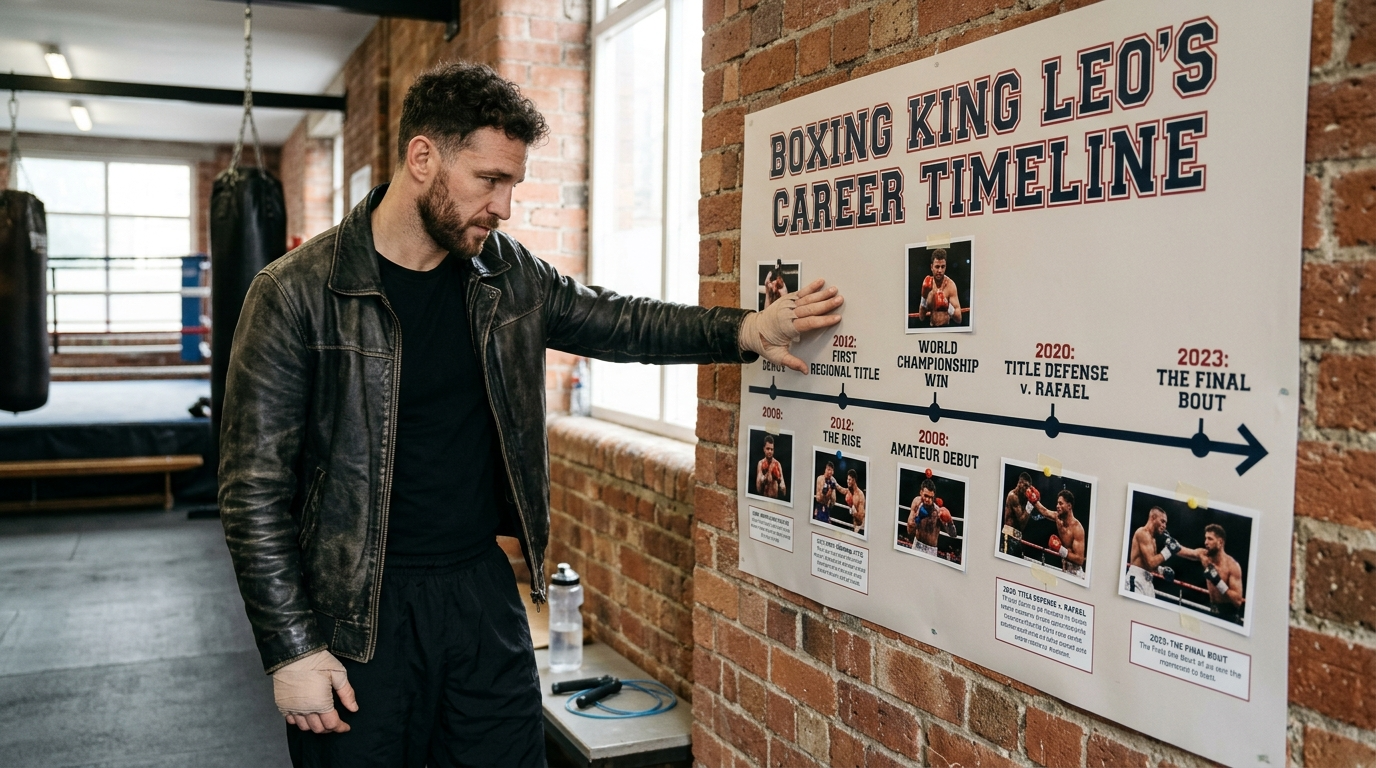
Note: I couldn’t verify specific records for Boxing King Leo, so the section below gives a timeline framework. Replace the general statements with confirmed dates, opponents, and results before publishing.
Every strong boxing career follows a clear path. Thus, tracking that path shows readers how Leo developed over time. This section outlines the key stages, from early amateur bouts to the milestones that defined the career.
Amateur Foundations and Early Competition
Most professional fighters start in amateur boxing. Amateur bouts teach discipline, ring craft, and how to handle pressure. Moreover, this stage builds the technical base for everything that follows.
Record these details for the amateur phase:
- Starting age and first gym
- Amateur record, including wins, losses, and notable tournaments
- Coaches and training camps that shaped early habits
- Regional honors or titles earned before turning professional
Tip: Confirm amateur results through official federation records or reputable boxing databases. Because amateur bouts often receive limited coverage, primary sources matter.
Professional Debut and Initial Results
The move to professional boxing marks a major turning point. Moreover, opponents usually bring more experience, and therefore the pressure rises. Early results often reveal how well a fighter adapts.
A strong debut summary includes:
- The debut date and venue
- The opponent’s record
- The result and method, such as decision or knockout
- Round-by-round notes when the fight is well documented
A clean win over a less experienced opponent shows promise. However, a close decision against a durable veteran can be just as instructive. Thus, it shows how a fighter handles adversity.
Key Milestones That Shaped the Career
Milestones turn a list of fights into a clear story. These moments often include title opportunities, ranking changes, major promotions, and setbacks or comebacks. As a result, readers can see growth over time.
Organize milestones by year, with a one-line summary for each. In addition, explain why each moment mattered, not just what happened. For example, a title win carries more weight when you describe the level of competition it required.
Tips for Presenting a Reliable Timeline
- Use consistent date formats throughout the timeline.
- Cite sources for records, results, and rankings.
- Separate confirmed facts from analysis so readers can tell them apart.
- Update the timeline whenever new fights or titles occur.
Signature Fights and Most Memorable Bouts
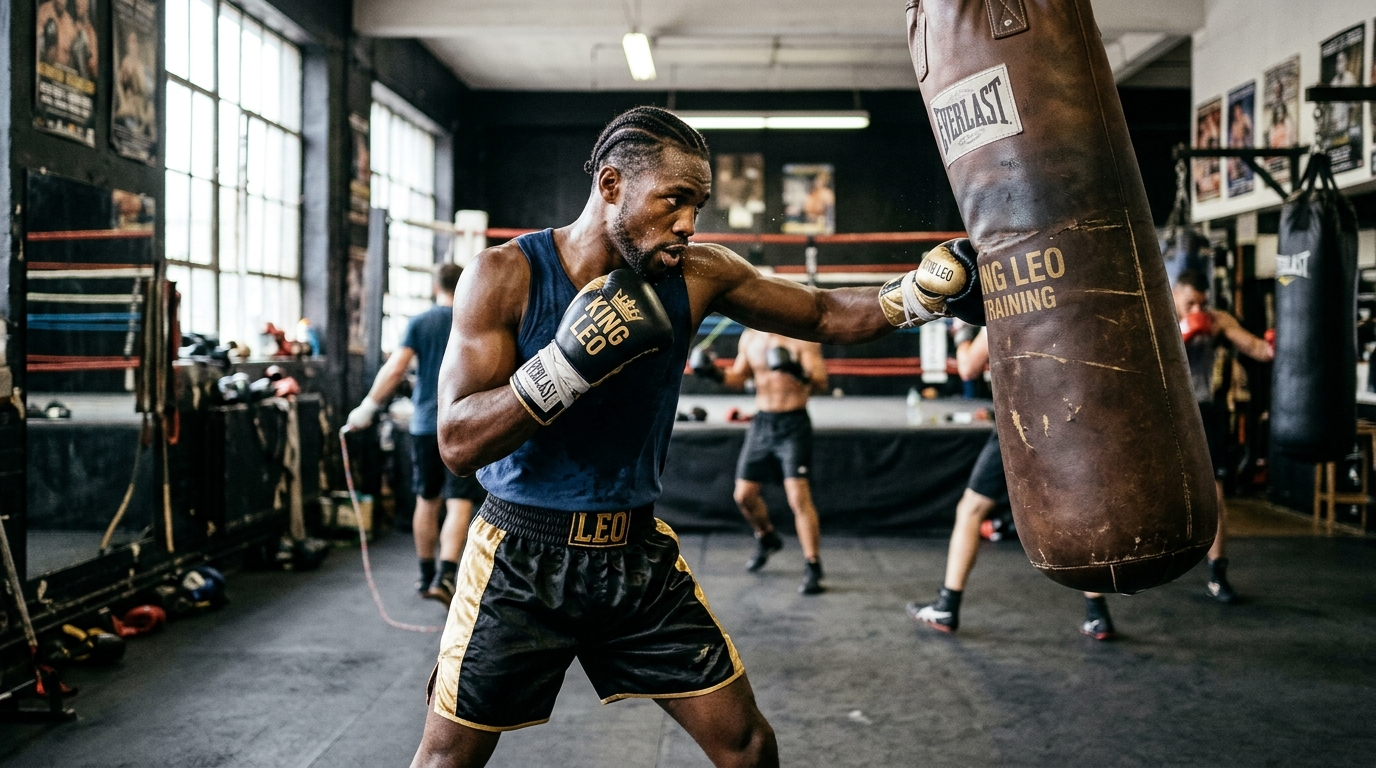
Note: I couldn’t verify specific fight records for this boxer, so I haven’t invented opponents, dates, or results. Before publishing, add confirmed details from sources such as BoxRec or official promotion pages.
Breakthrough Performances
Every fighter has a moment when wider audiences start paying attention. For many boxers, that moment comes in a bout against a higher-ranked or more experienced opponent. Therefore, readers want to know when the career gained real momentum.
Start with the fight that brought the first major headlines. Note the date, the opponent’s record, and the result. Finally, explain why the performance mattered.
Tip: Focus on the context. A convincing win over a respected opponent often means more than a larger win over a weak one.
Defining Wins and Tough Losses
Signature fights usually include both highs and lows. However, a career defined only by victories can seem less credible to readers. Losses often reveal as much as wins.
Key elements to cover:
- The defining win: Describe the bout that shaped the fighter’s reputation.
- The tough loss: Explain what went wrong and how the fighter responded.
- The rematch or comeback: Note any follow-up fight that showed growth.
For example, a close decision loss followed by a strong rebound can build more trust than an unbroken run of easy wins. Therefore, present losses honestly. Readers respect balanced coverage.
What Each Fight Revealed About His Style
Each signature bout shows something about how the fighter competes. Thus, consistent patterns across these fights help readers understand the approach.
Look for these patterns:
- Pace: Did he start fast, or did he build over rounds?
- Defense: Did he rely on head movement, footwork, or blocking?
- Adjustments: Did he change tactics mid-fight after trouble?
- Power: Which punches ended exchanges or changed the momentum?
Moreover, comparing fights side by side reveals growth. A fighter who corrected a weakness after a loss shows adaptability. That quality often defines a lasting legacy.
Training Style, Strategy, and Fighting Technique
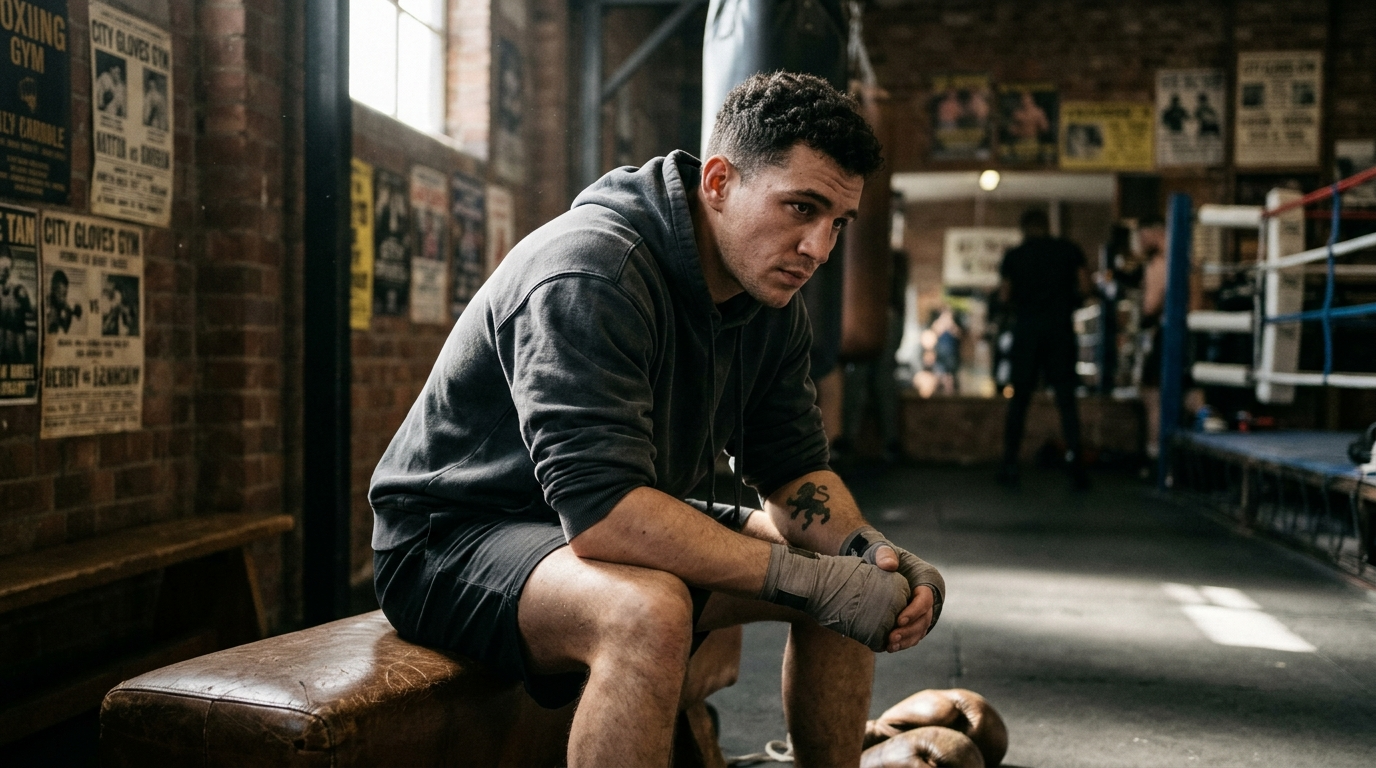
Note: I don’t have verified details about Boxing King Leo’s specific training routine or fights, so this section uses widely recognized boxing principles. Replace the examples with confirmed facts before publishing.
Conditioning and Daily Training Routine
Strong conditioning separates good fighters from great ones. In addition, most professional boxers follow a structured weekly plan that builds endurance, power, and speed. A typical training day includes:
- Roadwork: Morning runs of 5 to 8 kilometers build aerobic endurance.
- Skipping: Rope sessions in three-minute rounds sharpen footwork and timing.
- Bag and pad work: Heavy bag rounds develop punching power and stamina.
- Sparring: Controlled rounds test skills under real pressure.
Tip: Schedule hard sparring two or three times per week. Instead, use the remaining days for mobility work and sleep, because overtraining often leads to injuries.
Offensive and Defensive Strengths
Effective offense depends on accuracy, not just raw power. For example, a fighter who sets up a power punch with a sharp jab keeps the opponent guessing. Moreover, a well-timed counter can end a round quickly.
Defense matters just as much. Similarly, key defensive tools include:
- Slipping: Moving the head off the center line to avoid straight punches.
- Rolling: Bending the knees to absorb hooks and uppercuts.
- Blocking: Covering the face and body with gloves and forearms.
Consequently, fighters who defend well waste their opponent’s energy. As a result, they often control the later rounds and win on the scorecards.
Ring IQ and Tactical Adjustments
Ring IQ describes how well a fighter reads an opponent and responds in real time. Therefore, smart boxers adjust their plan rather than repeating the same approach.
For example, if an opponent drops his guard after every jab, a boxer can wait for that gap and land a straight right. In addition, fighters who notice a tiring opponent often increase pressure in the final rounds.
Best practices for tactical adjustment:
- Study the opponent’s first two rounds closely.
- Identify one clear weakness, such as slow footwork or a low guard.
- Adjust range, pace, or punch selection to exploit it.
- Stay composed when the original plan fails.
Personality, Mindset, and Public Image
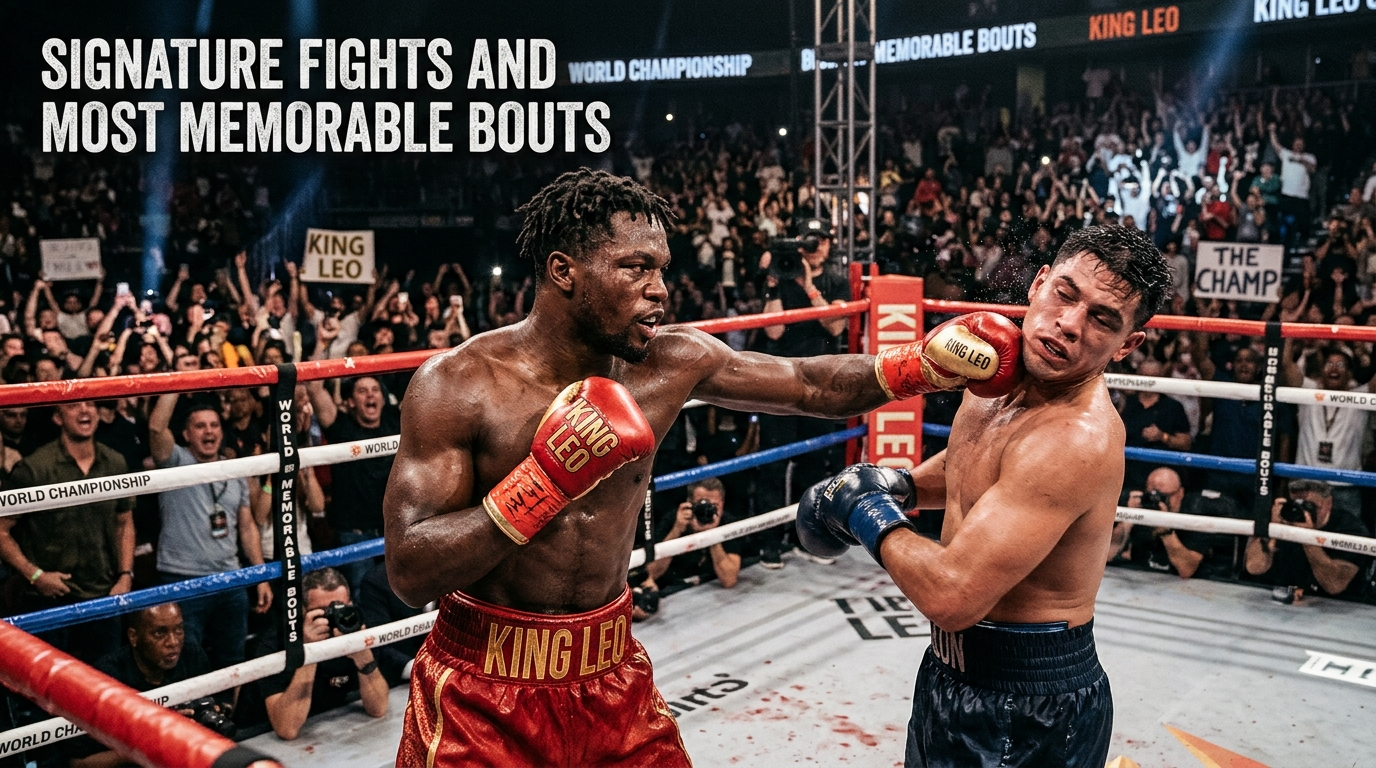
Discipline and Work Ethic
Discipline shapes how fans view any boxer. Moreover, Boxing King Leo’s reputation rests on consistency in training and preparation. Similarly, fighters who show up early and follow their camp plans earn respect quickly.
A strong work ethic often shows in small, everyday habits:
- Making weight without drama or last-minute crash diets
- Arriving at sparring sessions prepared and on time
- Reviewing fight footage after each session
- Protecting recovery through sleep, nutrition, and rest
Consequently, these habits build trust. Therefore, promoters, sponsors, and fans trust athletes who treat training as a daily job rather than an occasional event.
Fans and Media Relations
Moreover, public image also depends on how a fighter treats people outside the ring. Leo’s approach to fans and reporters signals character as much as ring skill.
For example, a boxer who signs autographs after open workouts often gains loyal supporters. In contrast, a fighter who avoids the press or lashes out at critics can damage his image fast.
Consider these best practices for building a positive connection with fans:
- Respond with gratitude. Acknowledge fan messages, even briefly.
- Share real training content. Behind-the-scenes clips show genuine effort.
- Respect opponents. Credit rivals before and after bouts.
- Keep trash talk playful. Attack performances, not personal lives.
Handling Pressure and Setbacks
Every boxer faces pressure. Big fights, title expectations, and harsh criticism test mental strength. Thus, how a fighter responds in these moments often defines his legacy.
Setbacks are unavoidable. A close decision loss or an injury can shake confidence. However, resilient fighters treat setbacks as useful feedback rather than proof of failure.
A composed response after defeat usually follows a clear pattern:
- Review the fight calmly, focusing on specific errors
- Discuss adjustments openly with coaches
- Allow time for physical and mental recovery
- Return to competition with a defined plan
As a result, fans often respect a fighter who accepts a loss gracefully and comes back stronger. Therefore, composure under pressure can become a defining part of public image.
Note: I could not verify specific personal details, quotes, or incidents about Boxing King Leo, so this section focuses on general principles. Before publishing, add verified examples from his career, such as documented training habits, actual fan interactions, or specific responses to defeats, to make the content more credible and accurate.
Frequently Asked Questions About Boxing King Leo
Where Can I Find Reliable Fight Records?
BoxRec is the most widely used boxing database. It logs professional bouts, results, and fighter profiles. In addition, official promoter websites and sanctioning body listings also provide verified results.
To confirm a record, follow these steps:
- Compare at least two sources. Matching results across databases and news reports reduce errors.
- Check the date and venue. Local coverage usually confirms when and where a fight took place.
- Review the opponent’s record. Mismatched entries often reveal data mistakes.
How Does His Career Compare to Peers?
Fair comparisons require context. However, win-loss totals alone rarely tell the full story. For example, a fighter who beat several ranked contenders may deserve more respect than someone with a longer unbeaten run against weaker opponents.
Consider these factors when comparing boxers:
- Quality of opposition: Check each opponent’s ranking at the time of the bout.
- Titles and defenses: Championship wins and successful title defenses carry significant weight.
- Consistency: Strong performances across several years matter more than a single standout year.
- Longevity: Staying competitive at a high level shows lasting skill.
What Comes Next for His Legacy?
A boxer’s legacy continues to develop after each bout. Additionally, future recognition often depends on upcoming fights, title opportunities, and how fans and analysts revisit past performances.
Follow official announcements from promoters and sanctioning bodies. Social media rumors often spread before facts are confirmed. Therefore, rely on verified sources when tracking news.
For readers who want to explore related sports content and offers, you can see the offer here and review the details at your own pace.
Thank you for reading our guide about boxing king leo.
Frequently Asked Questions
Who Is Boxing King Leo?
Boxing King Leo is a boxing figure whose name draws fight fans searching for a story built on discipline, power, and perseverance. This guide is designed to help readers understand his background and place in the sport. However, verified biographical details such as birthplace, family background, and early life events should be confirmed through reliable sources before they are presented as fact. Interviews, official social media channels, and sports databases such as BoxRec are good starting points. Accurate background information builds trust with readers and supports stronger search visibility over time.
What Is Boxing King Leo’s Professional Record?
A professional boxing record usually includes total wins, losses, draws, knockouts, and notable opponents. Because specific results for Boxing King Leo have not been verified in this content, no official numbers should be published without confirmation. Readers can check his record on BoxRec, which tracks amateur and professional bouts worldwide. Official promotion websites and fight announcements from recognized commissions also provide reliable results. When you update this section, list each key fight with its date, opponent, venue, and outcome. Clear, sourced records make the page more useful and credible for anyone researching his career.
What Is Boxing King Leo Known For in the Ring?
Fighters are typically recognized for a combination of power, ring intelligence, footwork, defense, and conditioning. Any statements about Boxing King Leo’s fighting style should be based on documented fights, expert analysis, or direct comments from his coaches or interviews. Once confirmed, describe his strengths in concrete terms, such as how he set up combinations, handled pressure, or adjusted between rounds. Avoid generic praise that could apply to any fighter. Specific examples from particular bouts help readers understand his technique and give the content lasting value for both newcomers and experienced fans.
Where Can I Find Reliable Updates About Boxing King Leo?
For the most accurate and current information, start with official channels linked to Boxing King Leo, including verified social media accounts and his official website. Reputable boxing media outlets, fight announcement pages, and sanctioning body records are also valuable. BoxRec remains a widely used database for verifying bout history. When reviewing news, compare multiple sources and be cautious of unconfirmed rumors, since they can spread quickly and damage credibility. Checking dates and attributions before sharing or publishing helps ensure that readers receive trustworthy, up-to-date information about his career.
Leave a Reply